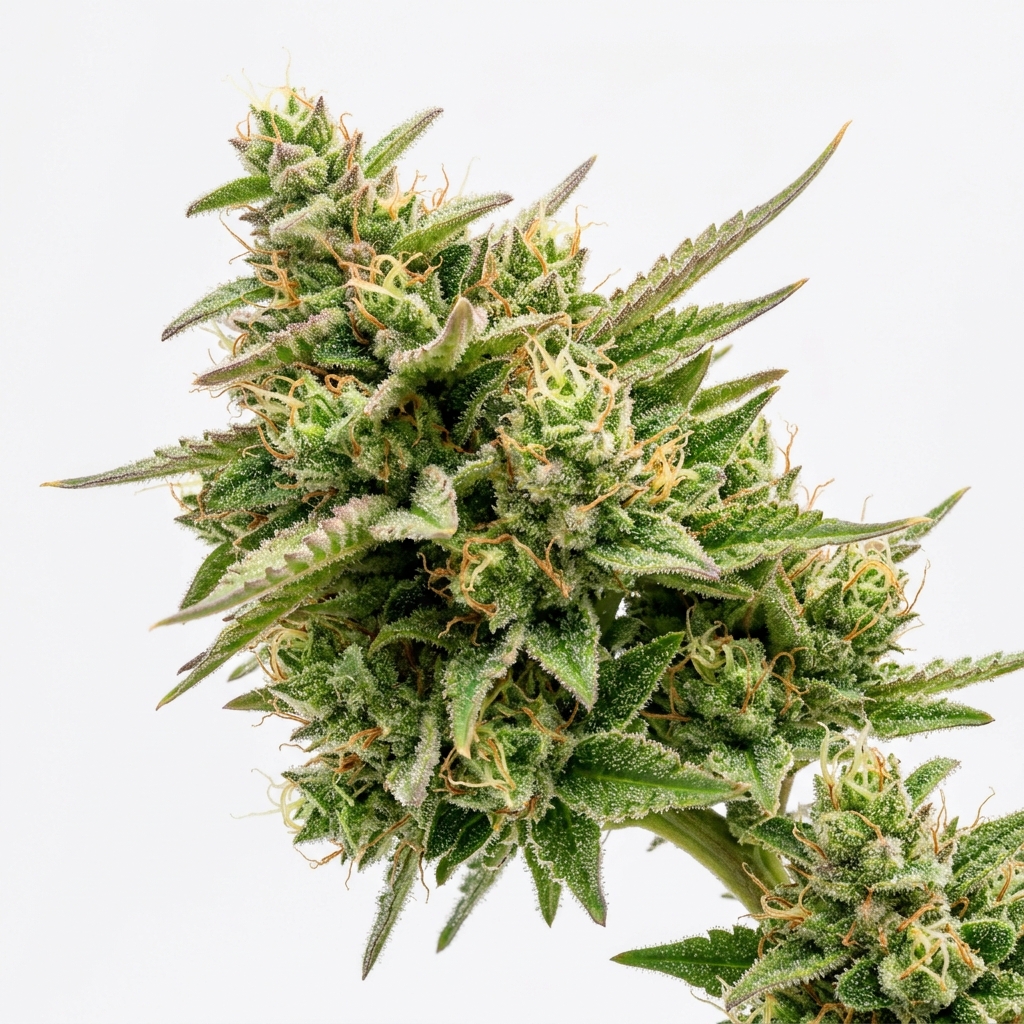
Cheddar Cheese (predominantly circulated in regulated commercial markets under the breeder spelling Cheddar Cheeze) is an indica-dominant hybrid cultivar engineered to reintroduce classic savory funk to modern terpene menus. Developed by Oregon-based agricultural genomics company Phylos Bioscience as part of their F1 Elite seed series, the cultivar represents a complex modern polyhybrid combining (Cake Mints × Platinum Girl Scout Cookies) with Gorilla Diesel #3. In contrast to the confection- and fruit-heavy terpene profiles dominating modern dispensaries, Cheddar Cheese delivers a fiercely savory olfactory signature of aged dairy, crushed garlic, fuel, and damp earth, grounded by a subtle exhale of creamy tropical mango.
A point of persistent industry confusion surrounds the moniker. An older, legacy European cultivar known simply as “Cheddar Cheese” (often linked directly to the Skunk #1 and Afghani lineage of original UK/Exodus Cheese) circulates in boutique and craft operations. However, the vast majority of regulated dispensary flower bearing the name across North America stems from the Phylos Bioscience breeding project, which achieved its signature dairy-diesel profile without utilizing classic UK Cheese heritage.
Strain Profile & Genetics
- Breeder: Phylos Bioscience (modern F1 Elite line); uncredited legacy breeder (classic European Skunk lineage)
- Genetics: (Cake Mints × Platinum GSC) × Gorilla Diesel #3 (modern); Skunk #1 × Afghani (legacy)
- Type: Indica-dominant hybrid (modern commercial); balanced hybrid (legacy)
- Indica/Sativa Ratio: Reported 70% indica / 30% sativa (commercial); 50% indica / 50% sativa (legacy)
- Seed Type: Feminized F1 hybrid seed
- THC: 30% ± 2% (breeder benchmark; commercial certificates report 26% to 32.93%)
- CBD: < 1% (typically ≤ 0.05% CBD / CBDa)
- Dominant Terpenes: Beta-Myrcene, D-Limonene, Linalool, Beta-Caryophyllene, Guaiol
- Flowering Time: 8 to 9 weeks (56 to 63 days)
- Outdoor Harvest: Full Season (early to mid-October in temperate Northern Hemisphere zones)
- Plant Structure: Medium stature, robust lateral branching, medium-high stretch in early flower, dense terminal colas
- Yield: 73 to 93 g/sq ft (breeder rating; reported 550 to 650 g/m² indoors)
- Aroma: Sharp aged cheddar, acrid diesel fuel, pungent garlic, damp musk, and ripe tropical mango
- Flavor: Savory cured cheese, black pepper, earth, garlic funk, and a soft, creamy tropical fruit exhale
- Mental Effects: Mood elevation, quiet mental clarity shifting into relaxed calm, and evening drowsiness (reported)
- Body Effects: Deep muscular tension release, heavy limb heaviness, warm peripheral tingling, and sedation (reported)
- Resin & Extraction: High trichome density on bracts; categorized by the breeder as unsuited for ice water extraction (washing)
Appearance
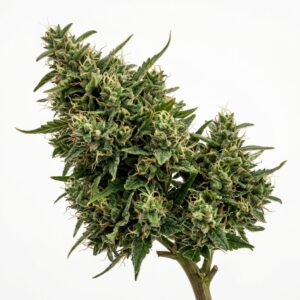
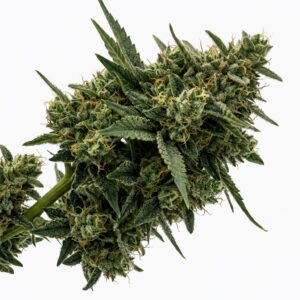
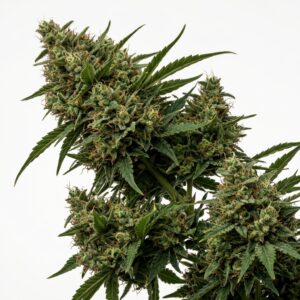
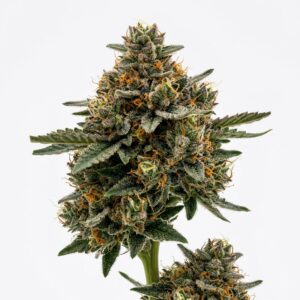
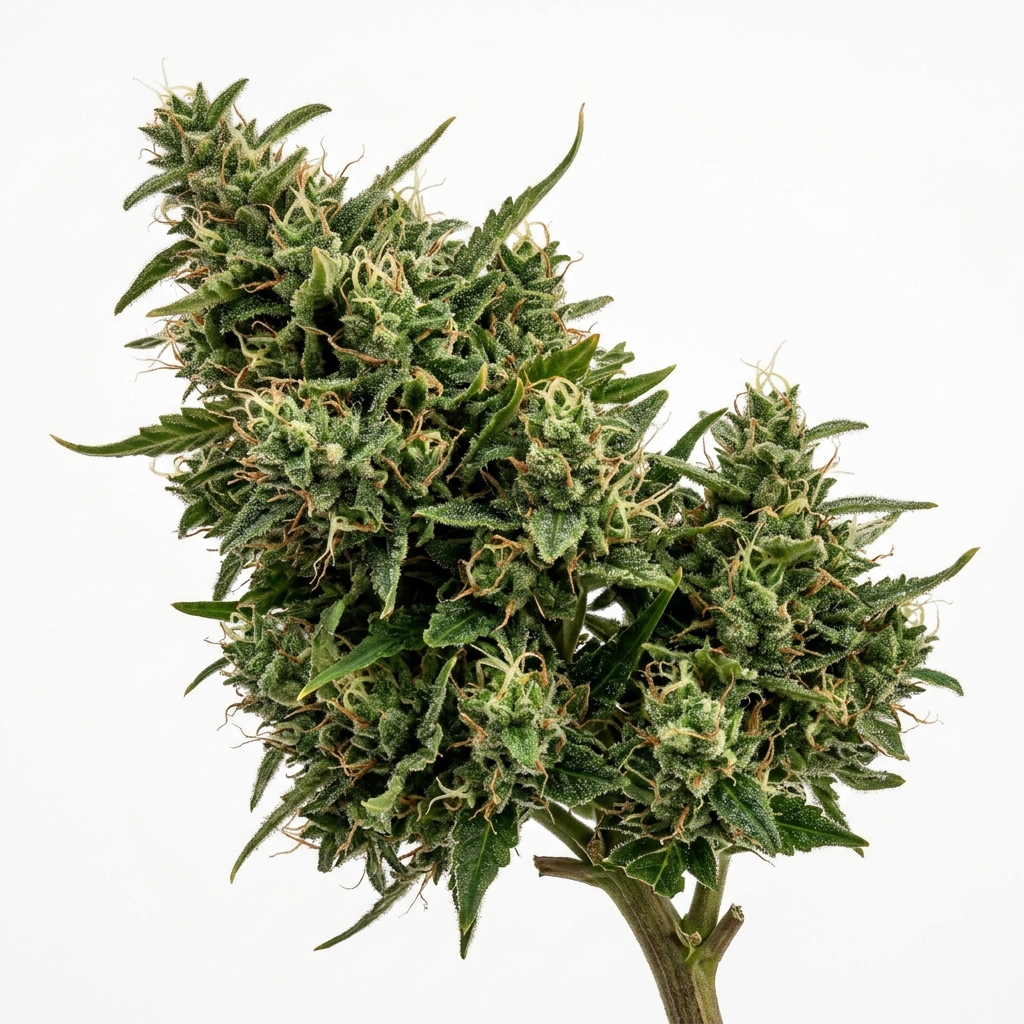
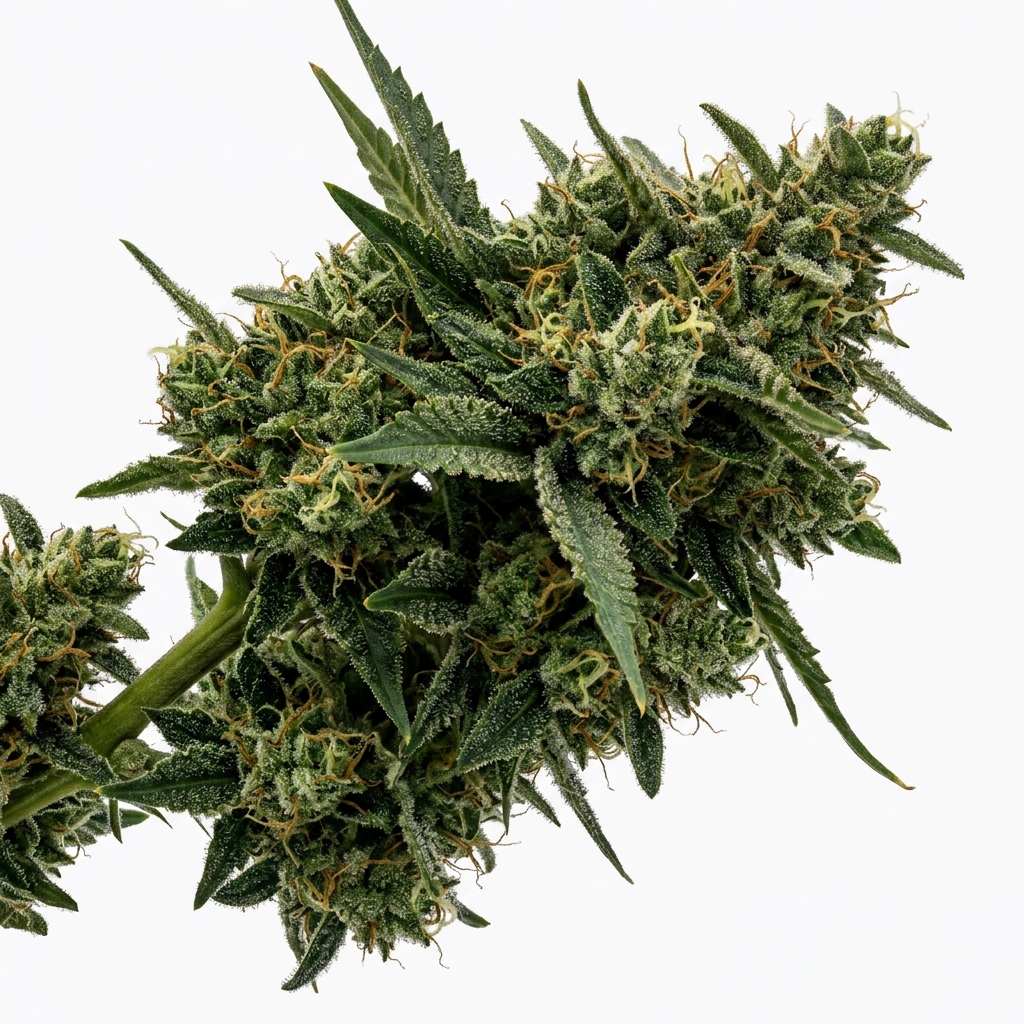
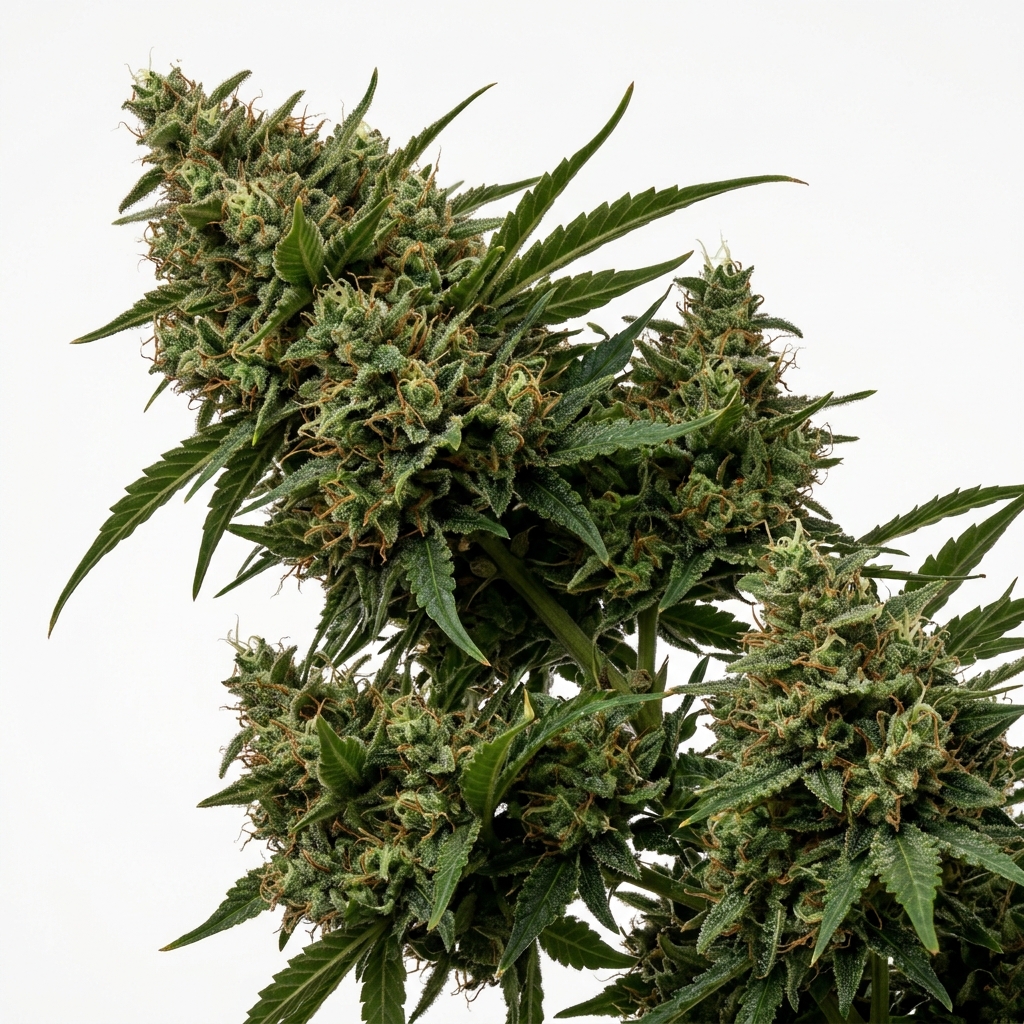
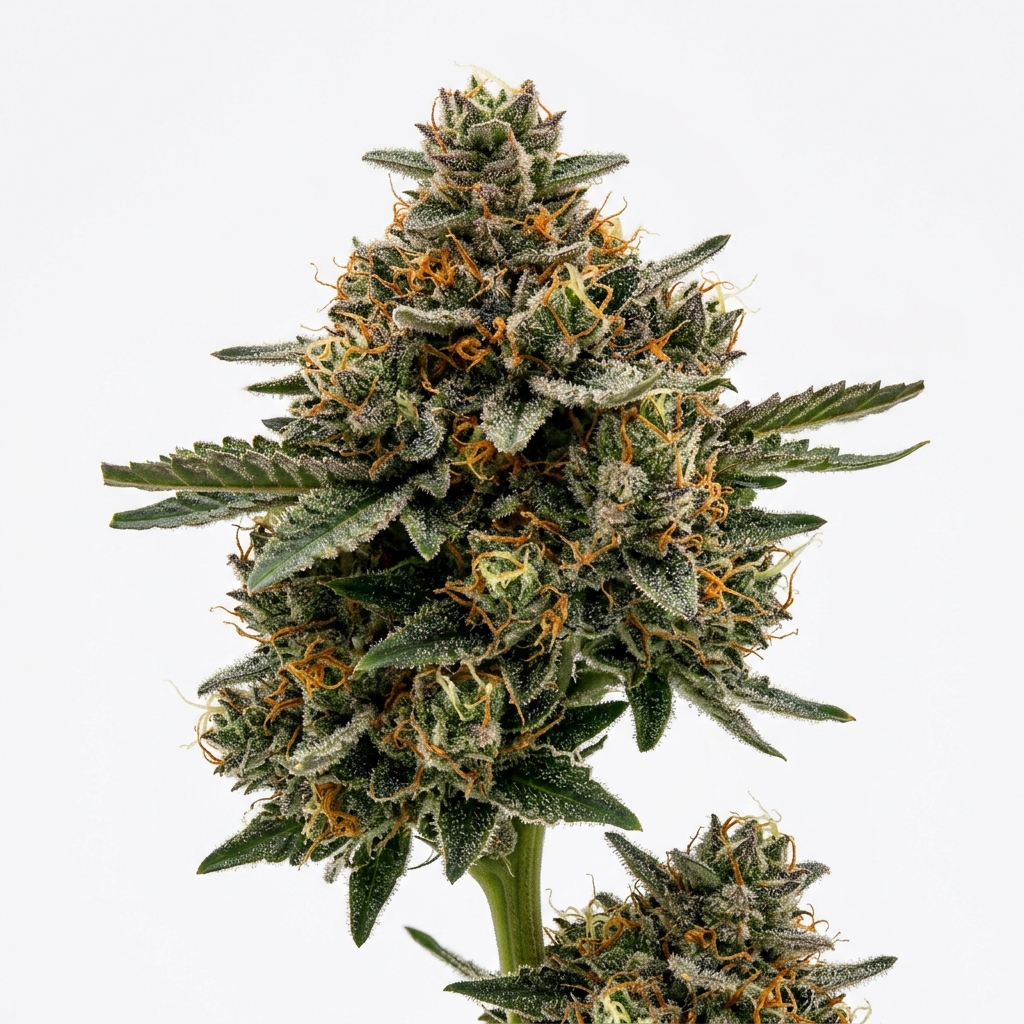
Cheddar Cheese produces dense, substantial inflorescences that growers frequently describe as “fist-shaped” colas. The floral architecture consists of tightly compacted bract clusters exhibiting vivid lime-green and deep emerald tones. In environments featuring standard night-time temperature drops, the sugar leaves and outer bract margins readily express rich anthocyanin pigmentation ranging from mottled violet to deep plum. Pistils remain relatively short and pale to fiery orange, weaving organically across the bud surface beneath a thick, glittering mantle of capitate-stalked glandular trichomes.
Aroma & Flavor
The sensory impact of Cheddar Cheese is unreservedly pungent. Upon opening a cured jar, the initial volatile burst is driven by sharp, sulfurous, and butyric aromatic tones reminiscent of aged sharp cheddar and rinded cheese, undercut by raw petroleum fuel from the Gorilla Diesel #3 parent. Breaking the flower releases heavy undertones of damp forest floor, allium funk (crushed garlic and green onion), and skunk. On consumption, the smoke or vapor delivers an intensely savory profile of aged dairy and peppery earth, surprisingly rounded out on the finish by a sweet, creamy tropical mango note inherited through its Cake Mints and Cookies lineage.
Terpene Profile
Analytical testing from the breeder documents an average total terpene concentration of 1.8% ± 1.0%. The primary chemical constituents driving this unique olfactory matrix include:
- Beta-Myrcene: Provides the earthy, musky foundation and contributes to the heavy physical relaxation experienced during late-stage effects.
- D-Limonene: Introduces an elevated, bright citrus nuance that tempers the heavy fuel and accentuates tropical top notes.
- Linalool: Imparts subtle lavender-like floral complexity that softens the acrid sulfur notes of the cheese profile.
- Beta-Caryophyllene: Delivers a spicy, black pepper bite that works synergistically with secondary sesquiterpenes to engage peripheral CB2 receptors.
- Guaiol: A sesquiterpene alcohol contributing woody, piney, and balsamic undertones found frequently in high-potency hybrid lines.
Potency & Cannabinoids
Phylos Bioscience lists an agronomic potency baseline of 30% ± 2% total THC for the F1 Elite seed line. Independent laboratory certificates of analysis (COAs) generated across various regulated state markets (including Maryland, Illinois, New Jersey, and Massachusetts) corroborate this high benchmark, commonly documenting finished flower batches testing between 26% and 32% total cannabinoids. THCa typically constitutes the overwhelming majority of the cannabinoid profile (often testing between 28% and 32.4%), with neutral Delta-9 THC measuring under 1%. Secondary cannabinoids remain nominal: CBD and CBDa generally test below 0.1% (frequently under 0.05%), with minor traces of cannabigerol (CBG/CBGa) registering around 0.1% to 0.8%.
Effects
Consumer experiences with cannabis are inherently subjective, varying based on personal metabolism, tolerance, dosage, and consumption method. The following descriptions synthesize widely reported experiential feedback rather than medical assertions.
Mental Effects
Consumers typically report a swift onset marked by quiet cerebral stimulation and mild euphoria. This initial clarity gently disarms mental fatigue and racing thoughts, promoting a tranquil headspace without aggressive raciness. As the session progresses, mental focus gives way to dreamy contentedness and heavy evening relaxation, making sustained high-focus tasks difficult.
Body Effects
The physical sensation begins as a warm, tingling wave localized behind the eyes and neck before migrating downward through the torso and extremities. Muscle tension significantly softens, accompanied by substantial limb weight. At moderate to higher doses, this progression reliably transitions into profound physical sedation, couch-lock, and drowsiness, positioning Cheddar Cheese predominantly as an evening or pre-bedtime selection.
Cultivation Characteristics
Cheddar Cheese was engineered as an F1 true hybrid seed variety to deliver uniform vigor, high germination rates (≥ 90%), and disease resilience compared to vegetative clone-only production. Cultivators observe strong vegetative development with notable elongation during the photoperiod transition, exhibiting a medium-to-high flower stretch that benefits from early topping, trellis training (ScrOG), or light super-cropping.
The cultivar demonstrates a flowering cycle of 8 to 9 weeks (56 to 63 days) under standard 12/12 indoor photoperiods, reaching full outdoor maturity by early to mid-October. Phylos agronomic data documents commercial indoor yield potential between 73 and 93 grams per square foot (translating in optimized canopies to approximately 550 to 650 g/m²), with growers noting an exceptionally favorable A-to-B grade bud ratio (approaching 10:1 uniform top-tier flower). Due to the high floral density and heavy resin coat of its maturing colas, relative humidity should be diligently reduced below 45% during late flower to mitigate potential fungal pathogens such as Botrytis cinerea. Odor filtration is mandatory, as volatile organic emissions during weeks 6 through 9 are exceptionally intense.
Resin & Extraction Characteristics
Visually, Cheddar Cheese is an abundant resin producer; sugar leaves and calyxes glisten under dense blankets of trichome heads. However, agronomic classifications from Phylos specifically flag this cultivar as unsuited for ice water hash washing (“Suitable for Washing: No”). While the glands are abundant, their mechanical cuticle thickness, stalk-to-head break point, or trichome head fragility make solventless mechanical separation inefficient, leading to lower yields in ice water extraction screens. Conversely, hydrocarbon extraction (BHO) and solvent-free heat-and-pressure methods (dry-cured or live flower rosin) reliably capture the cultivar’s intense savory volatile fractions.
Scientific & Botanical Overview
Botanically, modern Cheddar Cheese demonstrates the convergence of polyhybridized North American genetic lines stabilized into a uniform F1 seed crop. Rather than relying on traditional European Cannabis sativa / indica landrace crosses that initially gave rise to volatile sulfur compounds (VSCs) in 1980s Skunk lines, Phylos achieved a comparable organoleptic profile through a tripartite cross of (Cake Mints × Platinum GSC) × Gorilla Diesel #3.
Recent analytical cannabis research indicates that authentic “cheesy” and “savory” profiles rely heavily on volatile organic sulfur compounds (such as prenylthiol derivatives) alongside short-chain fatty acids (such as isovaleric and butyric acids) working in concert with core terpenes like myrcene and caryophyllene. Cheddar Cheese successfully concentrates these volatile trace sulfur families against a modernized, high-THC resin matrix.
Lineage & Related Strains
The family tree of modern Cheddar Cheese bridges dessert, fuel, and savory profiles:
- Cake Mints: An Wedding Cake descendant bringing dense trichome coverage, creamy notes, and heavy resin output.
- Platinum GSC: Adds deep anthocyanin coloration, structural rigidity, and peppery sweetness.
- Gorilla Diesel #3: Contributes raw petroleum aromas, rapid vegetative vigor, and sharp pungent undertones.
- Legacy “Cheddar Cheese” (Disputed Counterpart): A historic Skunk #1 × Afghani line originating in Europe, standing as a cousin to UK Exodus Cheese.
- Related Cultivars: UK Cheese, Gorilla’d Cheese, Triple Cheese, and Cheese Bx1.
Sources & Data Notes
Agronomic, yield, and lineage parameters for the modern commercial cultivar are grounded in primary breeder documentation and technical data published by Phylos Bioscience (F1 Elite Series). Verified Certificates of Analysis from commercial state-licensed producers (including Grassroots, Curaleaf, and Florette) and specialist aggregators (Leafly, Weedmaps, AllBud) provide batch-level potency ranges, terpene breakdowns, and consumer experiential reports. Historical lineage variations referencing Skunk #1 × Afghani reflect legacy European archival records and independent craft cultivator profiles.
Cheddar Cheese Summary
Cheddar Cheese is an indica-dominant polyhybrid bred by Phylos Bioscience from a cross of (Cake Mints × Platinum GSC) × Gorilla Diesel #3, delivering 26% to 32% THC with negligible CBD. Renowned as a pungent counterpoint to dessert cultivars, it blends aromas of aged sharp cheese, crushed garlic, and diesel with an unexpected creamy mango undertone. Maturing in 8 to 9 weeks with heavy, uniform yields, it offers deeply tranquilizing evening effects characterized by quiet cerebral ease and potent body sedation.