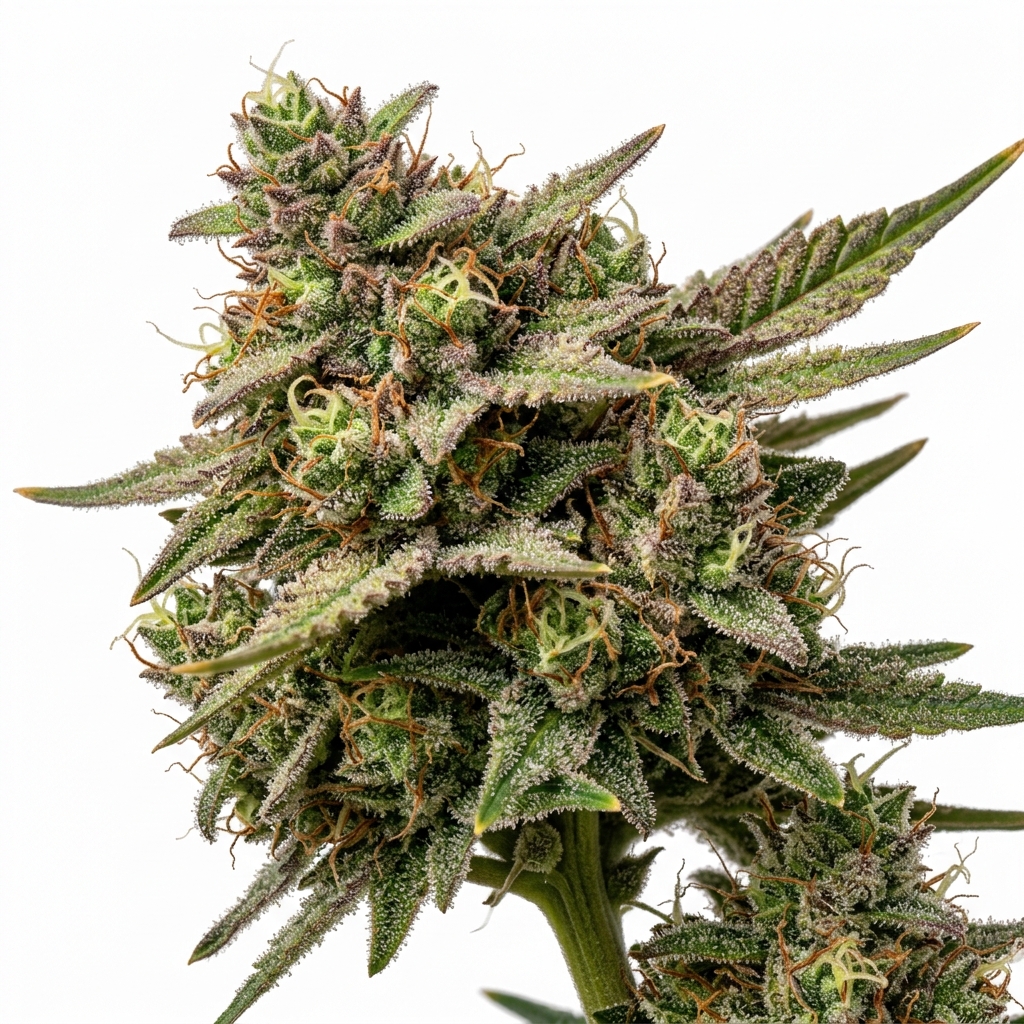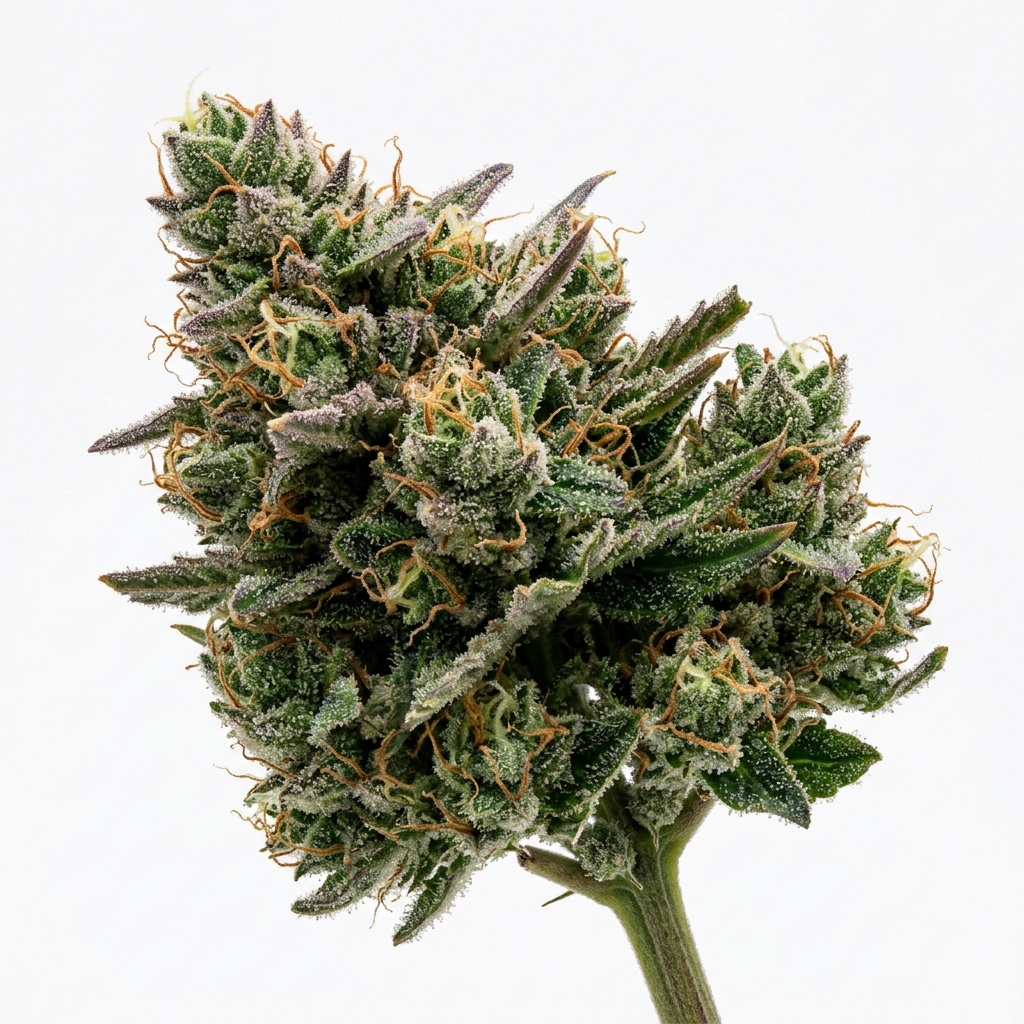

Pb Bites (frequently labeled as PB Bites or Peanut Butter Bites) is a high-potency cannabis cultivar rooted in the celebrated cross of Do-Si-Dos and Mendo Breath (the parent stock of Peanut Butter Breath). The original breeder responsible for isolating and releasing the specific PB Bites selection is Not reliably established in verified horticultural records, though the cultivar has gained widespread commercial distribution through licensed multistate producers such as FIND. The variety is recognized for its unique organoleptic profile that merges savory roasted nuts, creamy confection, and damp earth with subtle floral diesel undertones. A dense blanket of capitate-stalked glandular trichomes provides heavy resin production, making the cultivar popular for both dried flower consumption and solventless hash making.
Strain Profile & Genetics
- Genetics: Do-Si-Dos × Mendo Breath (Peanut Butter Breath genetic line)
- Type: Disputed (documented in horticultural references as an indica-dominant hybrid, while frequently classified and marketed by commercial licensed producers as a sativa)
- THC Range: 22% – 28% (commercial batches testing between 21.49% and 28.66%)
- CBD Range: 0% – 0.089%
- Dominant Terpenes: Beta-Caryophyllene, Limonene, Beta-Myrcene
- Flowering Time: 56 – 63 days (8 – 9 weeks)
- Plant Structure: Compact broad-leaf hybrid with strong lateral branching and moderate internodal spacing
- Yield Potential: 400 – 500 g/m² indoor
- Aroma: Roasted peanut, damp earth, sweet bakery dough, light pine, and subtle diesel
- Flavor: Nutty, creamy earth, pastry sweetness, and mild peppery spice
- Mental Effects: Alert, creative, and euphoric in sativa marketing; quieted mental decompression in hybrid documentation
- Body Effects: Calming physical decompression, muscle relaxation, and moderate body warmth
- Resin & Extraction: High glandular trichome density with greasy, solventless-friendly head development
Appearance
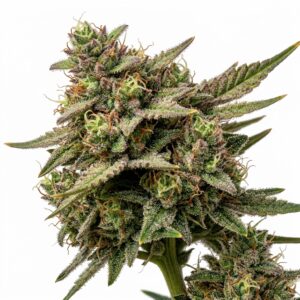
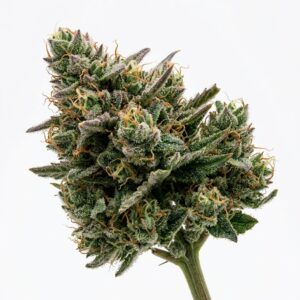
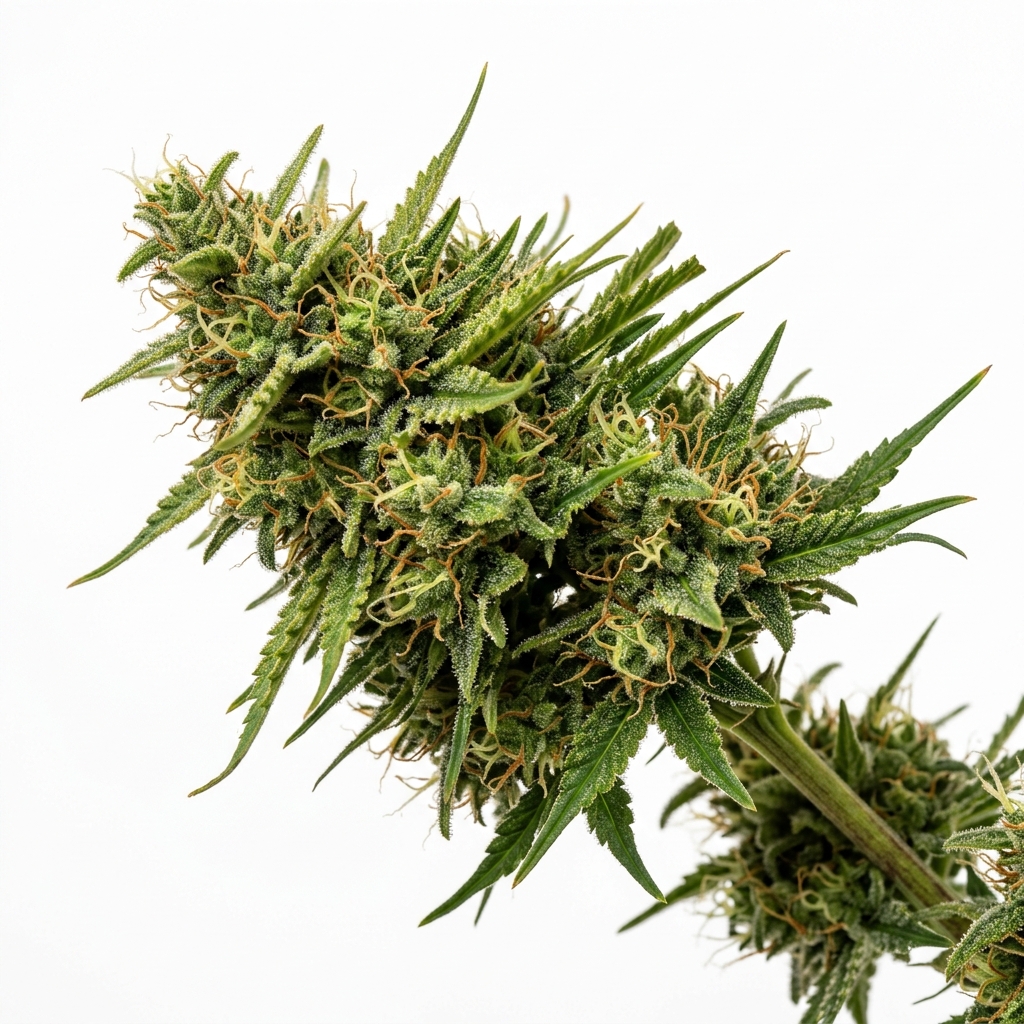
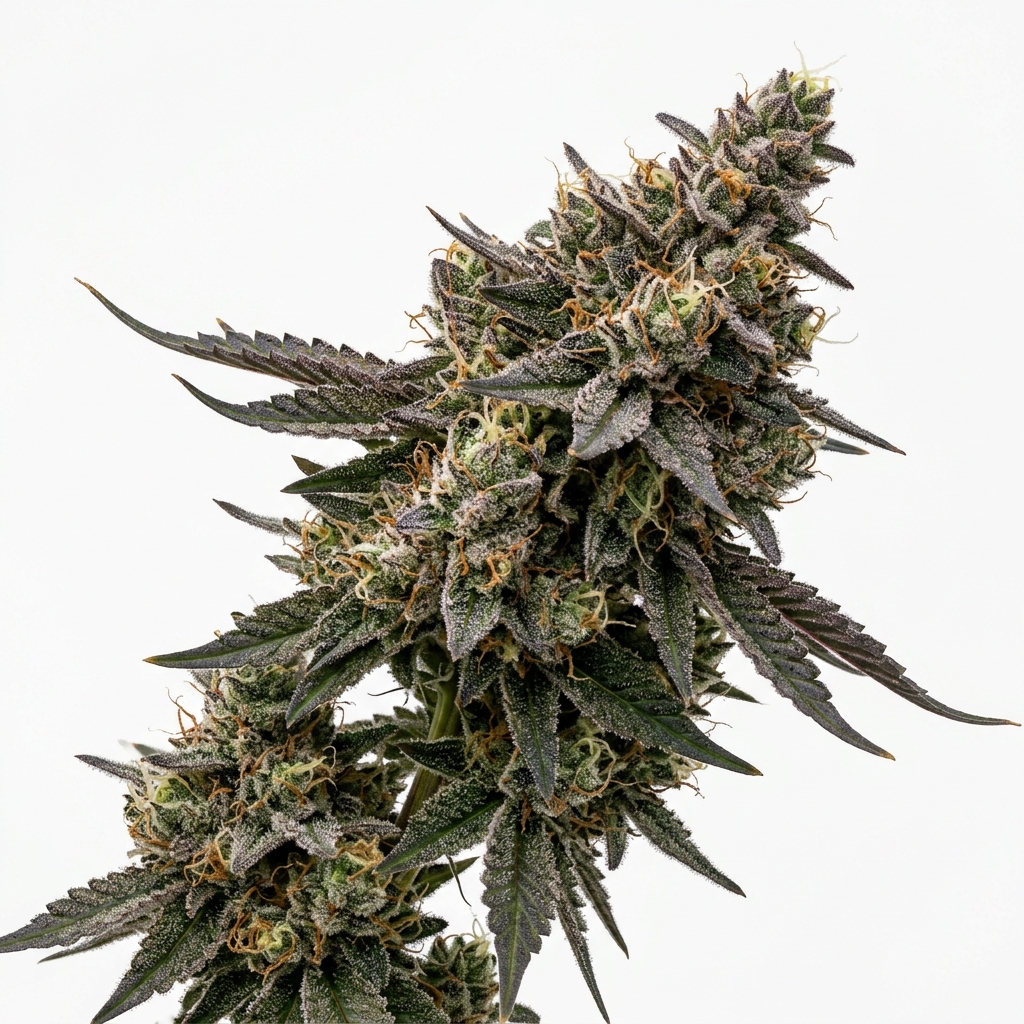
Pb Bites forms compact, dense flowering clusters that exhibit traditional broad-leaf structural density. The calyxes develop in tightly packed spherical formations, displaying colors that range from forest green to deep olive. Under cooler finishing temperatures late in the flowering cycle, anthocyanin expression frequently presents as deep plum or lavender pigmentation across outer bract tips and accompanying sugar leaves. The inflorescences are threaded with thin, tightly curling pistils that turn from vibrant peach to a dark rustic copper upon maturity. Mature buds feature a thick, glistening coat of bulbous and capitate-stalked trichomes, imparting a frosted, silver-tinged sheen across the entirety of the calyx surface.
Aroma & Flavor
The terpene expression of Pb Bites is distinguished by savory confectionery nuances rarely found in modern fruit-forward cultivars. Upon opening a cured jar, the initial aromatic profile presents warm roasted peanuts, rich hazelnut butter, and moist loamy soil. Breaking or grinding the flower releases underlying notes of sweet bakery dough, cracked black pepper, herbal hops, and a faint gas or diesel finish.
On inhalation, the smoke or vapor delivers a distinct creamy, nutty foundation accented by sweet earthy tones. The exhalation introduces a subtle spicy sharpness characterized by caryophyllene-driven pepper, followed by lingering traces of sweet wood and floral citrus.
Terpene Profile
Analytical testing across commercial harvests reveals total terpene concentrations typically ranging between 0.88% and 2.36%. While proportional ratios vary by cultivation environment and phenotype selection, the dominant aromatic profile is consistently driven by three primary terpenes:
- Beta-Caryophyllene: Often the leading terpene (testing up to 1.03% in isolated high-resin batches), providing the cultivar’s distinctive cracked-pepper kick and warm spice.
- Limonene: Testing between 0.09% and 1.10%, introducing subtle citrus brightness that balances the heavier earthy undertones.
- Beta-Myrcene: Present in ranges from 0.03% to 0.30%, imparting herbaceous notes, damp earth, and contributing to the overall entourage dynamic.
Secondary and trace terpenes documented on commercial Certificates of Analysis include alpha-humulene (0.05% – 0.26%), linalool (0.07% – 0.22%), beta-pinene (0.02% – 0.20%), alpha-pinene (0.01% – 0.19%), and alpha-bisabolol (up to 0.08%).
Potency & Cannabinoids
Pb Bites is a consistently high-potency cultivar. Published botanical overviews establish a standard baseline of 22% to 28% THC. Third-party testing from commercial state-regulated dispensary batches demonstrates THC levels routinely falling within this bracket, including recorded values of 21.49%, 23.22%, 24.30%, 25.06%, 25.77%, 26.64%, 26.77%, 27.31%, and 28.66%. In full cannabinoid profiles, THCA comprises the primary constituent (frequently measuring 28.82% to 32.26%), alongside neutral delta-9-THC between 0.37% and 0.49%. Total Active Cannabinoids (TAC) have been recorded up to 33.056%.
Cannabidiol (CBD) expression remains minimal, testing from 0% to 0.089% (or up to 0.1% total CBD). Minor cannabinoid tracking has identified cannabigerolic acid (CBGA) at approximately 0.40%, cannabichromene (CBC) at 0.12%, and cannabidiolic acid (CBDA) at 0.11% in representative laboratory batches.
Effects
Consumer experiences reported for Pb Bites present a divergence that reflects the differing ways the cultivar is classified in the marketplace.
Mental Effects
In retail markets where Pb Bites is distributed under a sativa classification (such as offerings by FIND), consumers commonly report an uplifting, clear-headed onset characterized by improved focus, creative engagement, and sociable energy. Conversely, consumers evaluating hybrid or indica-leaning phenotype cuts report a gentle slowing of racing thoughts, accompanied by quiet mental ease and a grounded headspace suitable for unwinding.
Body Effects
Across classifications, the physical effects are generally described as comforting and tension-relieving. Users frequently observe an easing of muscular stiffness and a steady sensation of physical warmth. At higher intake levels or late in the duration of the session, the physical relaxation tends to deepen, leading to mild sedation without immediate paralysis.
Cultivation Characteristics
Cultivation records indicate that Pb Bites develops moderate hybrid vigor during the vegetative phase, displaying broad, overlapping fan leaves and dark green coloration inherited from its Afghan and Kush ancestry. Plants reach a medium indoor height of 100 to 140 cm, forming a sturdy central stem supported by durable lateral branches.
The indoor flowering cycle requires 56 to 63 days (8 to 9 weeks). Indoor yields are moderate to high, generally quantified at 400 to 500 g/m² under optimized environmental parameters. Because the canopy develops dense foliage and tight floral clusters, growers advise active pruning, defoliation, and controlled late-flower humidity to safeguard against mold or botrytis. Specific outdoor harvest dates and outdoor yield metrics have not been formally documented.
Resin & Extraction Characteristics
Pb Bites is noted for early and generous resin gland development. Trichome coverage extends well beyond the calyx structure onto surrounding sugar leaves and small water leaves. The glandular trichome heads are oily and rich in sesquiterpenes, which contributes to favorable mechanical separation in ice water extraction. Solventless extractors often select this lineage for producing live rosin, as its distinct nutty, confectionary, and peppery aromatic markers translate distinctly into concentrated resin formats.
Scientific & Botanical Overview
Botanically, Pb Bites is an intra-specific hybrid of Cannabis sativa L., exhibiting pronounced broad-leaflet morphology (BLD). The genome descends from Do-Si-Dos (OG Kush × Girl Scout Cookies) and Mendo Breath (OGKB × Mendo Montage), incorporating significant genetic influence from heritage Afghani, Pakistani, and Durban landrace stock. The interplay between beta-caryophyllene (a dietary cannabinoid known to agonize the CB2 receptor), limonene, and myrcene illustrates how non-cannabinoid secondary metabolites may modulate receptor signaling and subjective effects when delivered alongside high concentrations of tetrahydrocannabinol.
Lineage & Related Strains
Pb Bites is directly related to the prominent Peanut Butter Breath family. Key relatives and ancestral cultivars include:
- Do-Si-Dos: Maternal or primary ancestor, providing structural density, potent resin coating, and classic OG Kush fuel undertones.
- Mendo Breath: Ancestral parent contributing deep purple coloration potential, compact growth habit, and rich, sweet caramel-earth tones.
- Peanut Butter Breath: The foundational cross of Do-Si-Dos × Mendo Breath F2, from which Pb Bites selections originate or derive.
Sources & Data Notes
Genotypic background and cultivation baselines are derived from specialized horticultural archives. Cannabinoid and terpene quantification represents aggregated Certificate of Analysis data from licensed retail releases produced by FIND (Curaleaf) across Massachusetts, New York, New Jersey, and Connecticut. Note that the broad classification of this cultivar remains Disputed: specialized botanical databases document the cultivar as an indica-dominant hybrid, whereas retail state compliance labels routinely designate it as a sativa based on batch-specific consumer effects and commercial product tiers.
Pb Bites Summary
Pb Bites is a high-THC cannabis cultivar (22% – 28%) characterized by its rich lineage of Do-Si-Dos and Mendo Breath. Notable for its distinctive roasted-nut, confectionary, and peppery flavor profile driven by beta-caryophyllene, limonene, and myrcene, Pb Bites delivers substantial resin density and a balanced, functional experience that bridges mental engagement with steady physical relaxation.