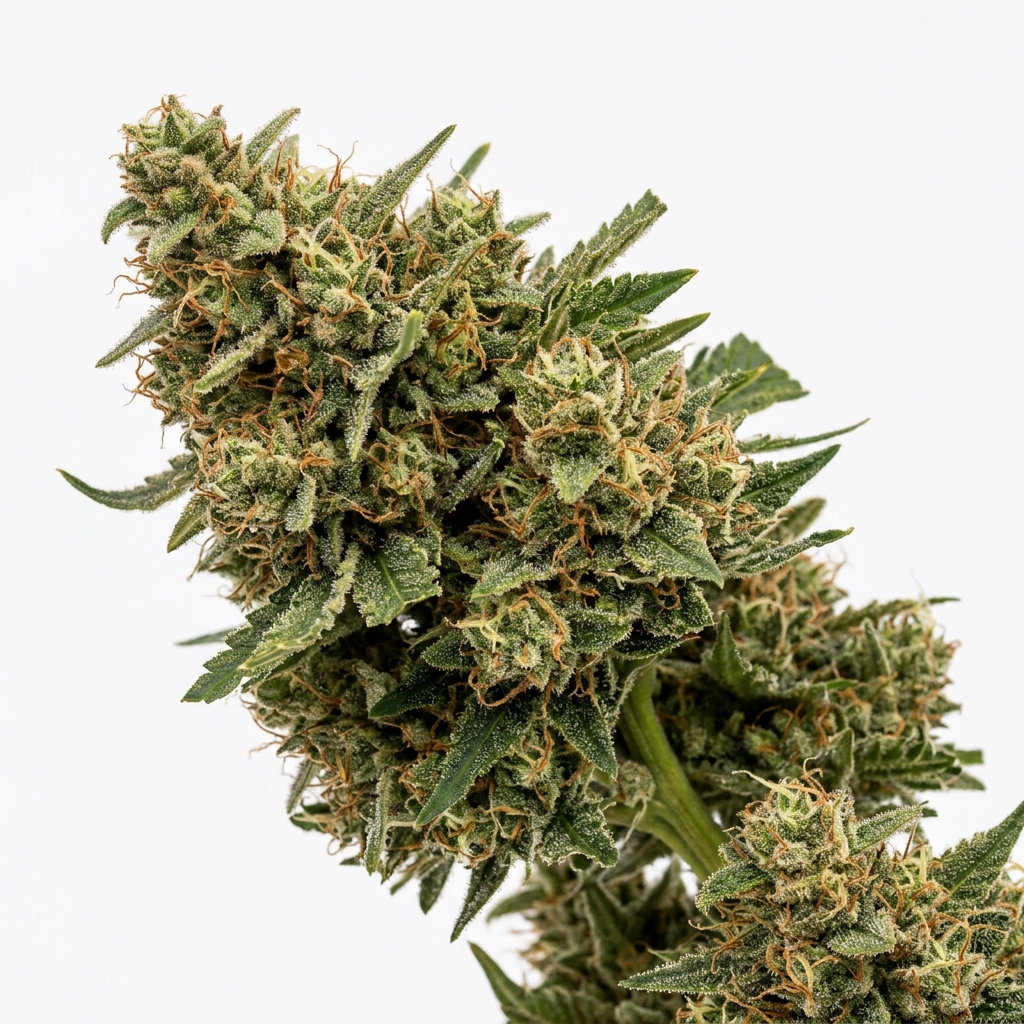
Raspberry Kiss is an indica-dominant hybrid cannabis cultivar recognized for pairing a vibrant, tart berry profile with functional physical relaxation. Most commonly documented as a cross between Raspberry Kush and Sour Diesel, this strain blends heavy Afghani-derived indica resin production with the energetic terpene complexities of classic East Coast diesel lines. While regional selections have circulated through private grower collectives and craft markets across North America, no single original breeder or formal seed bank registry has stepped forward to claim undisputed primary credit.
Strain Profile & Genetics
The core documented characteristics for the Raspberry Kiss flower cultivar are outlined below:
- Genetics: Raspberry Kush × Sour Diesel (disputed in concentrate form)
- Strain Type: Indica-dominant hybrid (approximately 70% indica / 30% sativa)
- THC Content: 18% – 24%
- Dominant Terpenes: Myrcene, beta-caryophyllene, limonene
- Flowering Time: 56 – 63 days (8 – 9 weeks)
- Plant Structure: Medium height (90 – 140 cm) with compact, conical flower clusters
- Yield Potential: 400 – 500 g/m² indoors
- Aroma: Sweet raspberries, tart berry skins, damp earth, light kerosene
- Flavor: Candied red fruit, sweet berries, peppery diesel finish
- Mental Effects: Mood elevation, mellow euphoria, calm focus
- Body Effects: Easing of muscular tension, mild physical heaviness, soothing relaxation
- Resin Production: High gland head density suitable for mechanical extraction and hydrocarbon washes
Appearance
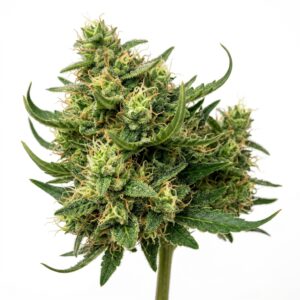
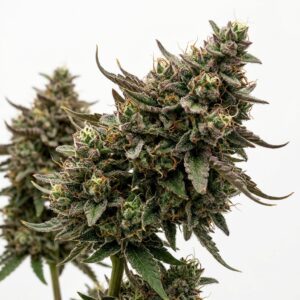
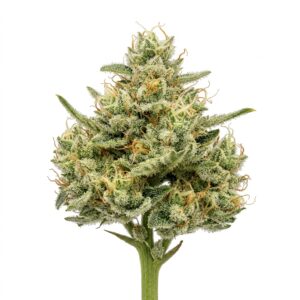
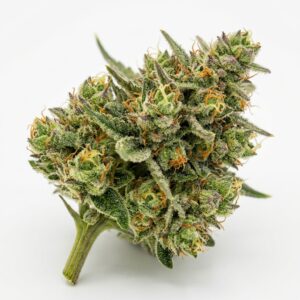
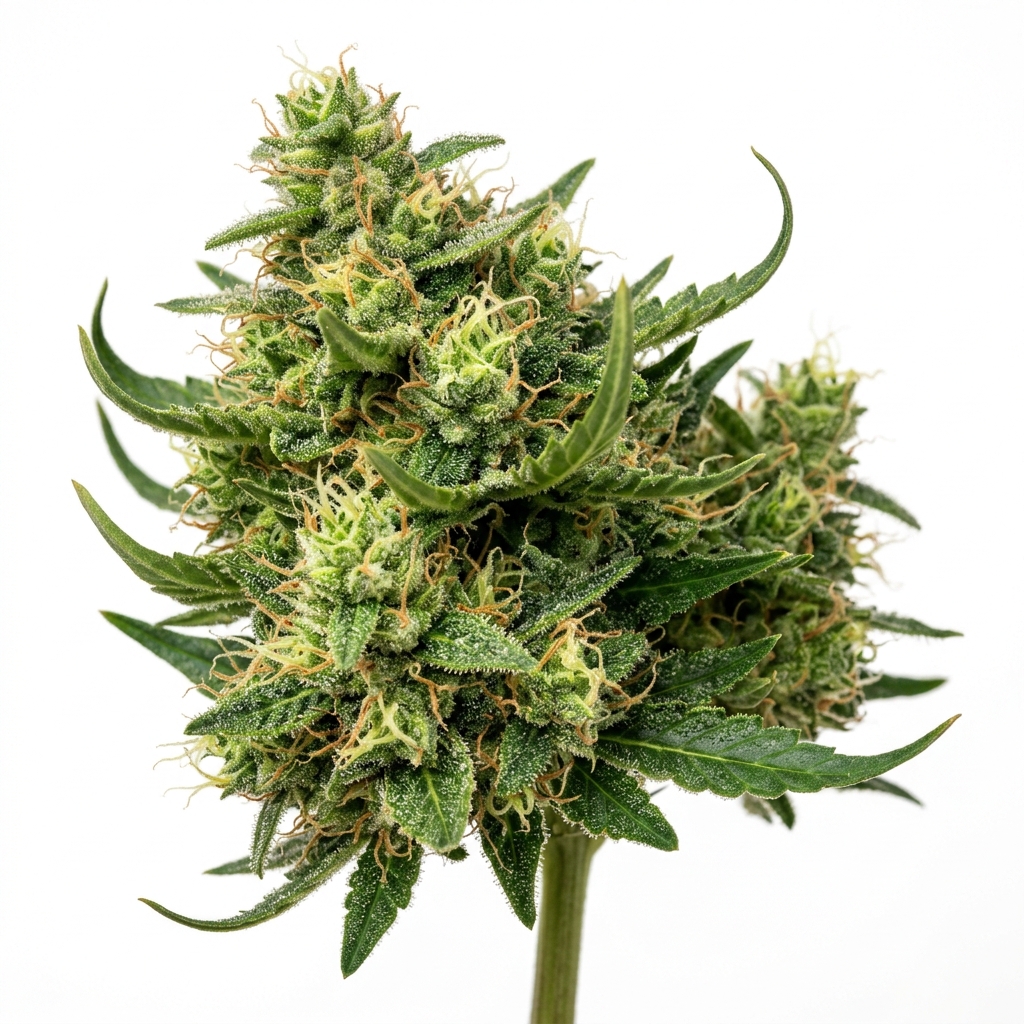
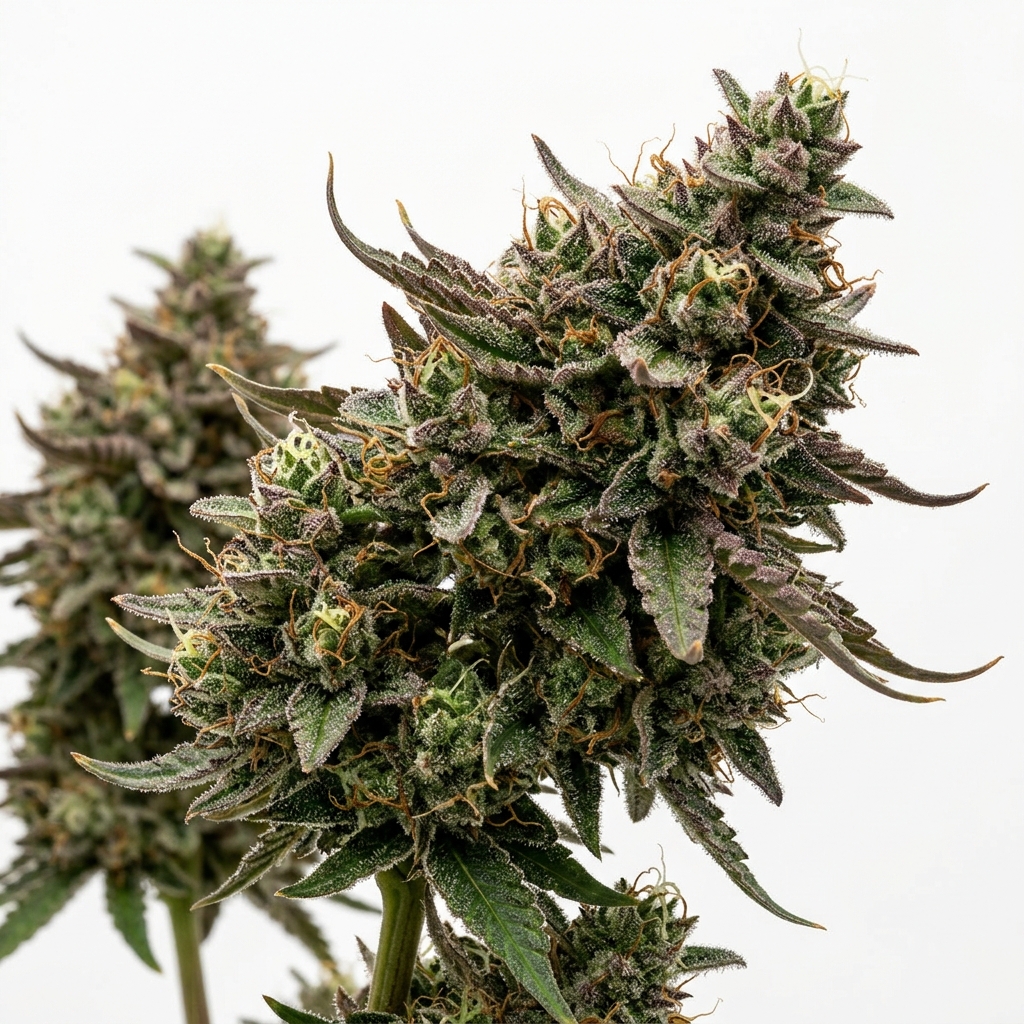
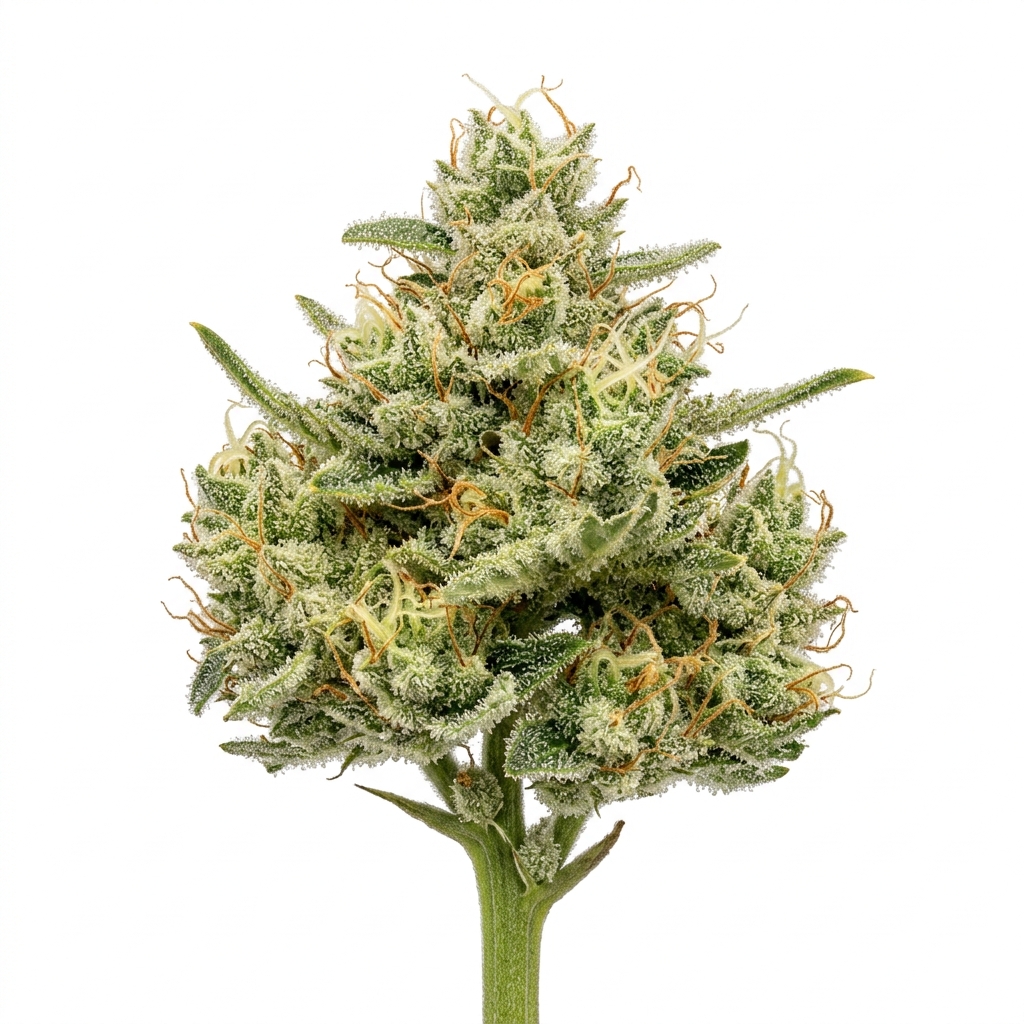
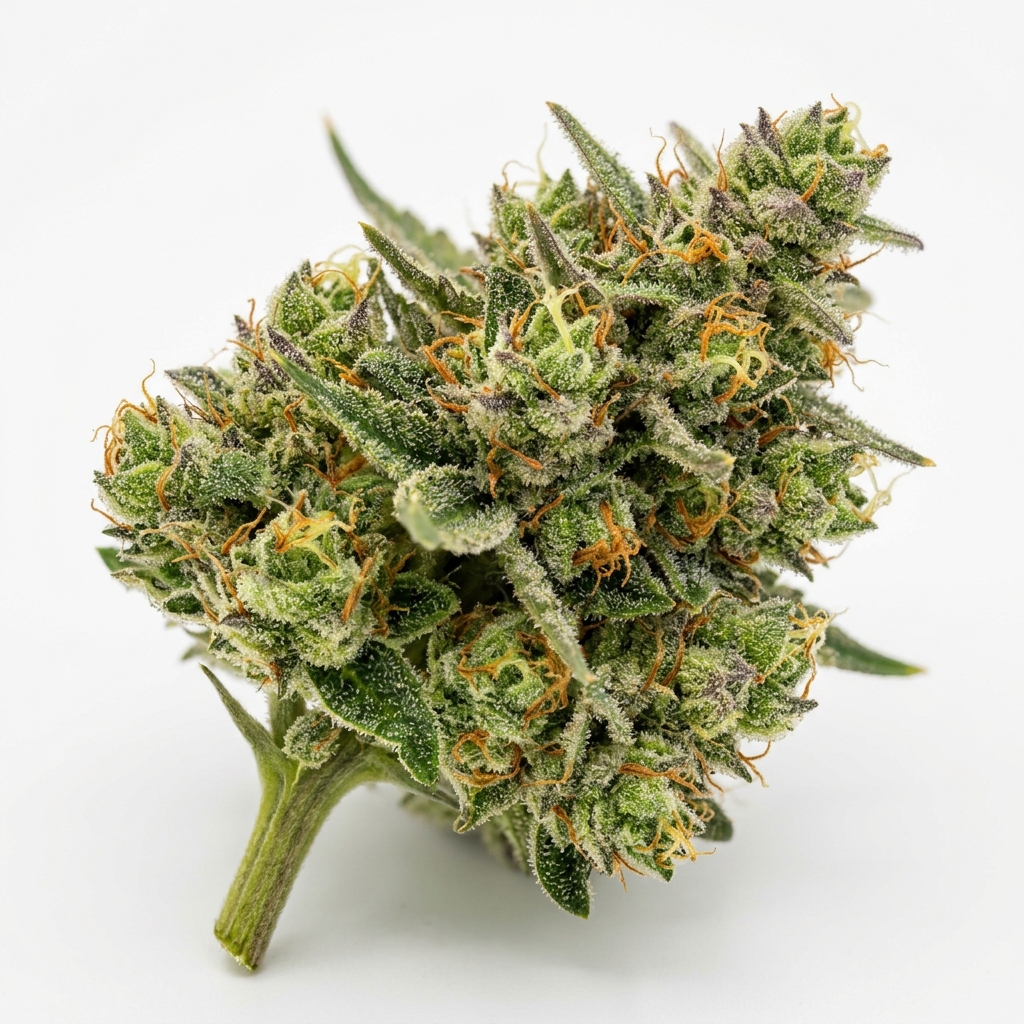
Raspberry Kiss develops dense, conical inflorescences that visibly reflect its Kush ancestry. The calyxes stack closely along compact bracts, forming solid, weighty colas. Inflorescences are predominantly deep olive green, frequently accented by forest-green sugar leaves and faint lavender-to-dusky hues when exposed to cooler night temperatures during late bloom. Threaded throughout the floral clusters are thin, tangled pistils that transition from pale tangerine to deep copper-orange as the plant ripens. A dense canopy of capitate-stalked glandular trichomes blankets both the bracts and surrounding trim leaves, giving well-cured flowers a silvery, frosted exterior.
Aroma & Flavor
True to its namesake, Raspberry Kiss produces an aromatic bouquet dominated by sweet red berries. Breaking open cured nugs releases pungent top notes of crushed ripe raspberries, jammy sweetness, and tart berry skins. Underneath the sweet fruit lies an earthy foundation characterized by damp loam, soft floral wood, and a pungent, sour chemical bite derived from its Sour Diesel forebear. On inhalation, the flavor delivers sweet candied berries with light citrus brightness. The exhale shifts toward an earthier, spicier finish, leaving lingering impressions of ground black pepper, hash spice, and faint diesel fuel on the palate.
Terpene Profile
Analytical observations and organoleptic reports indicate that Raspberry Kiss presents a terpene composition dominated by myrcene, beta-caryophyllene, and limonene. Myrcene contributes to the rich, herbal, and damp-earth baseline while enhancing the overall calming sensory profile. Beta-caryophyllene lends a warm, spicy bite that introduces peppery sharpness to the exhale. Limonene accentuates the top notes with tangy, citrus-peel brightness that cuts through the heavier sweet-fruit aromas. Secondary concentrations of pinene and humulene are also intermittently detected, rounding out the cultivar’s herbal and woody depth.
Potency & Cannabinoids
Laboratory testing of Raspberry Kiss dried flower generally records total THC levels ranging from 18% to 24%. Cannabidiol (CBD) concentrations in standard flower samples remain minimal, rarely measuring above baseline trace amounts. This cannabinoid balance produces a classic THC-forward profile with rapid physiological uptake, demanding measured dosing from novice or low-tolerance consumers.
Effects
Consumers report that Raspberry Kiss provides a balanced, functional progression of effects that begins in the head and gradually settles into the body.
Mental Effects: The onset is marked by an immediate lifting of mental fog, fostering quiet euphoria, mild introspection, and stress reduction. Consumers often note improved conversational ease and gentle creative focus without the raciness or agitation occasionally provoked by pure sativas.
Body Effects: As the experience matures, the indica lineage asserts itself. Warm physical ease descends through the neck, shoulders, and spine, softening muscular tightness without imposing immediate couchlock. While high consumption levels can lead to pronounced lethargy, moderate quantities remain functional and well-suited for late-afternoon or evening relaxation.
Cultivation Characteristics
Raspberry Kiss exhibits an intermediate growth habit with prominent broad-leaf morphological traits. Plants typically reach a moderate final height of 90 to 140 cm, showing moderate vegetative branching and manageable internodal spacing inherited from its Sour Diesel parent. When grown indoors, the cultivar responds favorably to canopy-management techniques such as low-stress training (LST) and topping to encourage even canopy illumination.
The indoor flowering phase spans 56 to 63 days (8 to 9 weeks). Under optimized environmental controls, indoor yields are reported between 400 and 500 g/m². Because the floral bracts form dense, compact clusters, growers must maintain low relative humidity (under 45%) during the final three weeks of flowering to protect against botrytis and fungal pathogens.
Resin & Extraction Characteristics
Thanks to the heavy resin production derived from Raspberry Kush and the expansive trichome head formation common in Sour Diesel crosses, Raspberry Kiss is favored by extractors. The glandular trichomes feature fragile stalks that release readily during ice-water agitation, producing terpene-rich bubble hash. In hydrocarbon live resin processing, the strain yields flavorful badder and sauce that vividly capture the candied-raspberry and fuel terpene fraction.
Scientific & Botanical Overview
Botanically categorized as a high-THC Cannabis sativa L. hybrid, Raspberry Kiss represents a chemovar driven predominantly by monoterpenes and sesquiterpenes interacting with type-I cannabinoid profiles. The combination of Afghani indica genetics with a Chem-descended line (Sour Diesel) results in moderate hybrid vigor, strong anthocyanin potential under temperature modulation, and a terpene profile characterized by monoterpenoid fruit notes juxtaposed against sesquiterpenoid spice.
Lineage & Related Strains
The primary lineage of Raspberry Kiss combines Raspberry Kush (an indica-dominant cross often attributed to Afghani and Kush heritage) with the legendary Sour Diesel (Chemdawg × Super Skunk). Closely related cultivars sharing similar genetics or sensory signatures include:
- Raspberry Kush: The maternal heritage providing dense calyx structure, heavy myrcene concentrations, and core red-fruit aroma.
- Sour Diesel: The paternal heritage contributing canopy stretch, increased trichome yield, and sour kerosene undertones.
- Raspberry Cough: A related sativa-dominant fruit cultivar pairing Cambodian sativa with ICE.
- Dark Desire × Purple Ghost: An alternative cross circulated commercially under the “Raspberry Kiss” label in boutique concentrate batches.
Sources & Data Notes
Publicly documented records for Raspberry Kiss stem primarily from regional dispensary menu analyses, processing lab reports, and horticultural strain catalogs. Lineage records for the flower cultivar consistently cite Raspberry Kush × Sour Diesel. However, consumers should note product disambiguation: several commercial hydrocarbon concentrates named “Raspberry Kiss” utilize independent pedigrees, such as Dark Desire × Purple Ghost, while select manufactured vape carts market proprietary botanical terpene formulations under the same title.
Raspberry Kiss Summary
Raspberry Kiss is a dependable, flavor-forward indica-dominant hybrid offering 18% to 24% THC. Balancing the sweet berry calm of Raspberry Kush with the pungent diesel bite of Sour Diesel, it provides soothing physical relief, subtle mental clarity, and an 8- to 9-week flowering window that performs reliably for indoor cultivators.