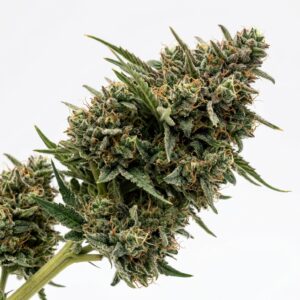

Alaskan Unicorn is a high-potency hybrid cannabis cultivar bred by the Alaska-based outfit Alleycat Genetics. Developed by crossing the celebrated powerhouse Cap Junky with AK Unicorn (frequently labeled in commercial dispensary markets as Unicorn Cake), the strain is recognized for its dense, pinecone-shaped inflorescences, heavy glandular trichome coverage, and an assertive chemical profile combining pungent fuel, citrus zest, and savory funk.
Strain Profile & Genetics
- Breeder: Alleycat Genetics
- Genetics: Disputed (Primary breeder documentation indicates Cap Junky × AK Unicorn; commercial packaging from Meigs County and select dispensaries reports Cap Junky × Unicorn Cake)
- Type: Hybrid
- THC: 24.9% to 29.19% total THC (batch dependent; THCA tested up to 30.00%)
- CBD: 0.049% (tested batch; CBDA/CBD generally below 0.1%)
- Dominant Terpenes: Limonene, Linalool, Beta-Caryophyllene, Guaiol
- Plant Structure: Dense, compact, pinecone-shaped floral architecture
- Aroma: Heavy diesel fuel, earthy skunk, sharp citrus, and savory allium funk
- Flavor: Gassy fuel, tart citrus zest, peppery spice, and sweet vanilla undertones
- Mental Effects: Clear-headed cerebral uplift, creative euphoria, and stress mitigation (reported)
- Body Effects: Deep somatic relaxation, physical ease, and evening couch-lock (reported)
- Resin & Extraction: High glandular trichome density; used commercially for solventless live rosin and cured resin concentrates
Appearance
Alaskan Unicorn produces dense, pinecone-shaped inflorescences characterized by tightly stacked calyxes and an exceptionally heavy glandular trichome layer. The floral structure displays a vivid spectrum of lime and forest greens, often developing subtle lilac or deep purple accents across outer bract tips when grown under cooler canopy temperatures. Woven through the frosty surface is a network of thin, copper-to-tangerine pistils that curl tightly against the bract surfaces. The overarching visual hallmark is a heavy, crystalline crust of trichome heads that gives the dried flower a snow-dusted, luminescent appearance.
Aroma & Flavor
The organoleptic profile of Alaskan Unicorn is characterized by pungent, heavy petroleum notes balanced with sharp citrus and an underlying savory depth. Upon breaking the floral clusters open, the cultivar releases an intense wave of gassy fuel, damp earth, and sharp lemon peel. Beneath the initial solvent-like bite lies a savory funk reminiscent of garlic, onion, and cured mushrooms—qualities inherited from the GMO lineage present within the Cap Junky genetic line. On inhalation, the smoke or vapor delivers a pronounced gassy punch accompanied by tart citrus rind and peppery spice, finishing with faint notes of sweet vanilla dough and woody pine on the exhale.
Terpene Profile
Laboratory assays demonstrate that Alaskan Unicorn regularly expresses a total terpene concentration ranging between 1.73% and 2.37% by dry weight. The primary monoterpene is limonene (often testing above 1.0%), which contributes prominent citrus and bright solvent overtones. This is complemented by meaningful concentrations of linalool (tested at approximately 0.53%), introducing floral and lavender facets that soften the harsh fuel profile. The sesquiterpene beta-caryophyllene (tested at approximately 0.33%) provides warm, peppery spice and acts as a dietary cannabinoid at CB2 receptors. In select lab profiles, the sesquiterpene alcohol guaiol is found in unusually elevated quantities alongside minor fractions of beta-pinene, alpha-pinene, humulene, bisabolol, and beta-myrcene.
Potency & Cannabinoids
Alaskan Unicorn is an exceptionally potent, chemotype I cultivar dominated almost entirely by tetrahydrocannabinolic acid (THCA). Across verified commercial certificate of analysis (COA) data and dispensary batch tests, total THC ranges from 24.9% to 29.19%, with isolated test runs reaching up to 30.00% THCA. Active delta-9-THC typically remains low in unheated cured flower (e.g., ~0.17%). Neutral CBD and CBDA levels are minimal, recorded around 0.049%. Minor cannabinoid production is largely represented by cannabigerol (CBG) and cannabigerolic acid (CBGA), often measuring between 0.40% and 0.43%.
Effects
Consumer reviews and dispensary patient feedback reflect subjective experiences that vary depending on dose, tolerance, and individual biochemistry.
Mental Effects
Consumers report that Alaskan Unicorn begins with a potent, euphoric head sensation that delivers swift stress relief. In measured doses, users describe the mental headspace as clear-headed, mood-elevating, and creatively engaging. Because of its substantial THC density, higher amounts can transition from light cerebral stimulation into mental deceleration, making it best suited for evening or unwinding hours.
Body Effects
Physical sensations are reported as deeply grounding and soothing. The cultivar frequently produces a pronounced physical heaviness that radiates from the neck and shoulders down into the limbs. Consumers frequently report that the later stages of the high bring profound somatic relaxation, appetite stimulation, and heavy couch-lock, leading many experienced consumers to choose it for evening tranquility and sleep support.
Resin & Extraction Characteristics
Due to its Cap Junky heritage, Alaskan Unicorn produces an abundant concentration of capitate-stalked glandular trichomes with large, easily detached resin heads. Commercial extractors frequently process fresh frozen Alaskan Unicorn into solventless live rosin. The resin yields a terpene-rich extract that retains the cultivar’s pungent diesel and citrus-funk profile while preserving high concentrations of THCA and rare secondary compounds like guaiol. It is also converted into cured resin cartridges and badder formulations.
Scientific & Botanical Overview
Botanically, Alaskan Unicorn functions as a high-resin, short-to-medium internodal hybrid displaying classic polyhybrid vigor. Its cannabinoid biosynthesis is channeled almost exclusively through the THCA synthase pathway, resulting in negligible expression of CBD synthase. The cultivar’s aromatic complex is notable for its secondary and tertiary terpene hierarchy: while limonene and beta-caryophyllene are standard across modern North American gas-forward cultivars, the presence of guaiol alongside linalool introduces a complex botanical signature. Guaiol, a sesquiterpenoid alcohol historically characterized in Guaiacum wood and cypress, brings a woody, pine-like nuance and has been subject to pharmacological interest for its potential antioxidant and anti-inflammatory mechanisms.
Lineage & Related Strains
Alaskan Unicorn’s lineage bridges elite contemporary breeding stock:
- Cap Junky (Parent): Bred collaboratively by Capulator and Seed Junky Genetics, Cap Junky is an ultra-potent cross of Alien Cookies × Kush Mints #11 renowned for extreme trichome production and gassy, minty pastry aromas.
- AK Unicorn / Unicorn Cake (Parent): The second parent line traces back to Unicorn genetics (frequently Unicorn Sherbert or Unicorn Cake, involving crosses linked to A-Dub and Sherb lines, adapted in Alaskan craft circles).
- Related Cultivars: Sister and descendant crosses from Alleycat Genetics include Alaskan Lynx and related selections that utilize similar northern-adapted breeding stock.
Sources & Data Notes
Genetic lineage data originates from Alleycat Genetics documentation alongside state-regulated commercial cultivators including Natural Selections, Meigs County, and licensed testing laboratories. While Alleycat Genetics identifies the pairing as Cap Junky × AK Unicorn, commercial retail packaging produced by Meigs County lists the pedigree as Cap Junky × Unicorn Cake; this discrepancy may reflect regional naming conventions or phenotype selection nomenclature. Cannabinoid and terpene figures represent verified batches analyzed by certified testing laboratories in adult-use cannabis markets (including Massachusetts and Ohio).
Alaskan Unicorn Summary
Alaskan Unicorn is an Alaska-bred hybrid developed by Alleycat Genetics that pairs Cap Junky with AK Unicorn. Distinguished by its pinecone-shaped, trichome-laden floral geometry, the cultivar delivers 24.9% to 29.19% total THC, underpinned by a dominant terpene blend of limonene, linalool, beta-caryophyllene, and guaiol. It offers an intense fragrance of pungent petroleum fuel, citrus, and savory allium, producing reported effects characterized by initial euphoric uplift followed by profound somatic relaxation.