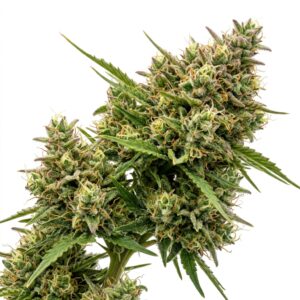

Sticky Pie is a hybrid cannabis cultivar developed by the Barcelona-based boutique breeding collective The Grateful Seeds. Bred as part of their Original Edition line, Sticky Pie unites two influential modern American cultivars: the legendary Gorilla Glue #4 (specifically the cut attributed to Josey Whales) and a selected California clone of Cherry Pie (Granddaddy Purple × F1 Durban). The cultivar is widely noted for its significant trichome coverage, robust vegetative vigor, and a distinctive aromatic profile that fuses petroleum-heavy solvent fuel with pungent cherry confectionery.
Strain Profile & Genetics
- Breeder: The Grateful Seeds
- Genetics / Lineage: Gorilla Glue #4 (Josey Whales cut) × Cherry Pie (California clone-only)
- Cultivar Type: Hybrid
- Seed Type: Feminized photoperiod
- Reported Potency: 23.5%–25.8% Total THC (commercial batch analytical certificates)
- CBD Content: Trace (0.06%–0.07% CBDA reported in third-party lab testing)
- Primary Terpenes: Limonene, Beta-Caryophyllene, Linalool, Beta-Myrcene, Alpha-Pinene
- Flowering Time: 60–65 days
- Plant Structure: Tall and vigorous with open lateral branching
- Yield: Medium
- Resin Production: High / Very good
- Aroma Profile: Fuel, diesel exhaust, sour cherry, damp earth, pine
- Flavor Profile: Sharp gas, tart stone fruit, sweet dough, peppery spice
- Reported Mental Effects: Cerebral stimulation, tranquil focus, mood elevation (subjective)
- Reported Body Effects: Muscular ease, physical heaviness, calm relaxation (subjective)
Appearance
Sticky Pie produces medium-to-large inflorescences that exhibit a dense, clustered calyx architecture characteristic of modern hybrid polyhybrids. The bracts present in shades of olive to rich forest green, with occasional light-lavender undercurrents emerging in cooler finishing conditions inherited from Granddaddy Purple genetics within its Cherry Pie lineage. A prominent blanket of capitate-stalked glandular trichomes coats every surface, giving the buds a silvery, frosted sheen and a wet, tacky texture when touched. Thread-like, curled pistils transition from pale saffron to a dark reddish-copper as the flowers reach physiological maturity.
Aroma & Flavor
The organoleptic profile of Sticky Pie reflects a distinct intersection of its parental chemotypes. On first inspection, the cured flowers project an assertive industrial fuel and sour gas profile typical of the Josey Whales GG4 line. Upon breaking or grinding the bracts, the pungent petroleum base opens to reveal sweet, stewed cherries, earthy musk, and faint floral tones. When vaporized or smoked, the smoke is thick and palate-coating, leading with a sharp kerosene bite that rounds out into sweet dark cherries, baked dough, and cracked black pepper on the exhale.
Terpene Profile
Analytical certificates of analysis (COAs) from commercially cultivated batches of Sticky Pie indicate a total terpene concentration commonly measuring between 1.0% and 2.3%. The dominant monoterpenes and sesquiterpenes include:
- Limonene: Serves as the primary or secondary dominant monoterpene (tested up to 0.59%), contributing citrus brightness and enhancing the sweet top notes.
- Beta-Caryophyllene: Present in substantial amounts (tested up to 0.44%), imparting a sharp, spicy, and woody aroma and interacting with peripheral cannabinoid receptors.
- Linalool: Unusually prominent for a gas-forward cultivar (tested up to 0.40%), providing floral softness and a lavender-like undertone.
- Beta-Myrcene: Present in moderate quantities (0.15%–0.18%), imparting herbal musk and earthy richness.
- Alpha-Pinene & Beta-Pinene: Secondary contributors providing sharp pine needle and crisp forest notes.
- Secondary Terpenoids: Trace analytical readings regularly record Alpha-Bisabolol, Alpha-Humulene, and trans-Nerolidol.
Potency & Cannabinoids
Laboratory testing from state-regulated cannabis dispensaries (including batches cultivated under brands such as Eden’s Trees and O’Dank) has documented total THC percentages ranging between 23.5% and 25.8%. In raw flower profiles, THCA accounts for 24.0% to 27.0% of the total mass, with decarboxylated Delta-9-THC typically testing between 0.78% and 2.46%. Secondary cannabinoids include minor concentrations of CBGA (0.83%–1.02%) and CBG (approximately 0.11%–0.13%), alongside trace values of CBDA (0.06%–0.07%). Cannabinoid concentrations naturally fluctuate depending on cultivation technique, light intensity, harvest timing, and post-harvest drying protocols.
Effects
Note: Subjective effects are based on self-reported consumer experiences and review datasets. Individual experiences vary significantly according to dose, individual biochemistry, and tolerance.
Mental Effects
Consumers commonly report a rapid onset characterized by mild cerebral euphoria and an elevated sense of contentment. The mental state is frequently described as calming yet clear-headed, avoiding extreme disorientation when consumed in modest amounts, though higher doses may induce mental deceleration and drifting focus.
Body Effects
Physical effects generally manifest shortly after the cerebral onset. Reviewers note an spreading sensation of physical warmth, noticeable relief from peripheral muscle tightness, and a steady downshift in overall kinetic energy. As the duration progresses, physical heaviness and grounded couchlock may occur, making the cultivar widely favored for evening relaxation or quiet, low-demand tasks.
Cultivation Characteristics
According to The Grateful Seeds, Sticky Pie is characterized by a vigorous, tall growth habit. Plants display strong apical dominance and pronounced internodal stretching during the transition to bloom, making early training techniques—such as topping, low-stress training (LST), and scrogging (Screen of Green)—beneficial for maintaining an even canopy. The breeder establishes an indoor flowering duration of 60 to 65 days. Overall flower yield is characterized by the breeder as medium, trading maximum commercial volume for dense calyx development and resin density. Outdoor seasonal harvest dates have not been reliably established in primary seed documentation.
Resin & Extraction Characteristics
Given the resin-heavy parentage of Gorilla Glue #4 and The Grateful Seeds’ explicit breeding focus on hash production, Sticky Pie is noted for very good glandular trichome output. The cultivar develops dense coverage of large, brittle trichome heads that separate cleanly during mechanical agitation. Licensed processors regularly utilize Sticky Pie fresh-frozen biomass for solventless bubble hash and live rosin extractions, as well as hydrocarbon live resin sugar and live cartridge formulations, because the wash retains both the heavy hydrocarbon volatile profile and sweet cherry secondary nuances.
Scientific & Botanical Overview
Sticky Pie represents a contemporary complex hybrid (Cannabis sativa L.) derived from multiple stabilization and selection projects in California and across the broader United States. The genetic cross balances Chem/Sour phenotypes (via GG4: Chem’s Sister × Sour Dubb × Chocolate Diesel) with classic West Coast indica-dominant polyhybrids (via Cherry Pie: Granddaddy Purple × F1 Durban). Botanically, the plant demonstrates photoperiod-dependent flowering, responsive vegetative uptake, and high gland-to-leaf surface ratios across both perigonal bracts and adjacent sugar leaves.
Lineage & Related Strains
- Mother: Gorilla Glue #4 (Josey Whales cut), famous for heavy resin yields, sharp diesel pungency, and intense potency.
- Father: Cherry Pie (selected California clone), prized for its sweet baked-fruit terpene profile and solid structural density.
- Related Grateful Seeds Hybrids: Barbara’s Pie, Orangina, Pineapple Madness, and other dessert-fuel projects emerging from the same European breeding facility.
- Differentiating Same-Name Strains: Sticky Pie should not be confused with similarly named cultivars such as Sticky Pine (Sticky Rice × Pink Pineapple) or Sticky Suits (Wedding Pie × GG4).
Sources & Data Notes
Data regarding Sticky Pie lineage, plant structure, height, resin production, and flowering timeline are sourced directly from catalog records and technical sheets published by the breeder, The Grateful Seeds. Cannabinoid ratios, specific terpene breakdowns, and minor cannabinoid metrics are gathered from state-licensed third-party laboratory certificates of analysis (COAs) for batches cultivated by licensed producers (including Eden’s Trees and O’Dank). Subjective effects and sensory tasting notes represent aggregated medical patient and adult-use consumer reports. Traits lacking verified analytical documentation remain marked as not reliably established.
Sticky Pie Summary
Sticky Pie is a high-resin hybrid cultivar bred by The Grateful Seeds by pairing Josey Whales’ Gorilla Glue #4 with a California Cherry Pie clone. It completes indoor flowering in 60 to 65 days, yielding medium volumes of dense, trichome-laden flowers testing between 23.5% and 25.8% THC in commercial batches. Driven by limonene, caryophyllene, and linalool, its aroma marries industrial gas with sweet, tart cherry accents, delivering a balanced blend of cerebral calm and deep physical relaxation.